In manufacturing, problems do not just repeat; they compound.
A machine goes down. A defect slips through. Someone makes a mental note. Someone sends an email. By next week, the same issue is back, same cost, no explanation.
This is not a people problem. It is a process problem. And it is one of the most expensive problems in manufacturing today.
Why Problems Keep Coming Back
Most manufacturers have a problem-solving culture. Teams huddle, run root cause analyses, assign corrective actions, and move on.
The intent is right. The infrastructure is not.
When problem-solving lives in notebooks, whiteboards, and email threads, the system is only as strong as the people holding it together. When those people leave, or move to the next fire, the knowledge goes with them.
The result: a floor that looks like it is improving but is recycling the same problems on a rotating schedule. Same escape categories. Same failure points. No one connects the dots because there are no dots — just scattered notes and faded memories.
The True Cost: It Goes Beyond Scrap and Rework
The visible costs of poor problem-solving are measurable: scrap rates, rework hours, warranty claims, downtime.
The hidden costs run deeper.
Every time a problem recurs, your team rebuilds context that should already exist. Every corrective action assigned without a clear owner has a near-certain chance of being forgotten. Every customer escalation on an issue your team already flagged internally costs credibility that is very hard to recover.
Then there is audit risk. If a QMS auditor asks for your corrective action history on a specific failure mode, the answer should be instant. If it means excavating old emails and asking people to recall events from six months ago — your QMS is a liability, not an asset.
What Structured Problem Solving Actually Looks Like
Lean manufacturing teaches that every defect is a signal. But signals only drive improvement when they are captured, analyzed, closed, and connected to the broader system.
Structured problem solving has four non-negotiables:
- Every issue is logged at the point of discovery with enough context to reconstruct it later
- Every problem has a clear owner and deadline
- Root causes are documented using a consistent methodology — 5 Why, Ishikawa, or 8D
- Corrective actions are verified closed — not just marked complete
Most teams get two of these right. Few get all four under production pressure.
How Resolve Brings Structure to the Floor
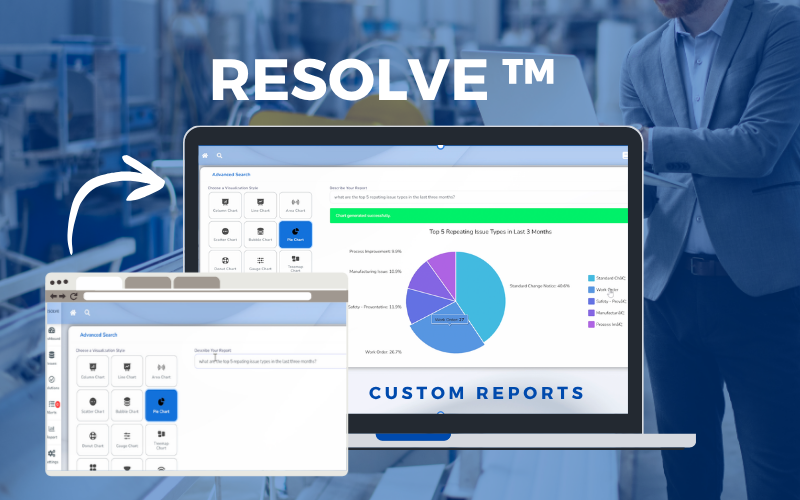
Resolve is Optegrity’s corrective action and problem-solving platform, built by lean practitioners for manufacturers who cannot afford to let problems recur.
With Resolve, every issue is captured the moment it surfaces, whether it’s on the line, at an inspection station, or in a customer escalation. Smart workflows scale to problem complexity, from a simple corrective action to a full 8D investigation. Root causes, engineering changes, and verification steps all live in one place, connected directly to your ERP.
Every action is automatically logged: who captured it, when it was assigned, what changed, and who approved closure. The result is an audit-ready record that is always current, always complete, and requires zero manual maintenance.
From Firefighting to Permanent Fixes
The best lean operations are not the ones with the fastest firefighters.
They are the ones that stop needing them.
That shift happens when problem-solving becomes a system, not a skill. When issues get captured and closed so completely that the same problem cannot come back. That is what Resolve was built to deliver.
Schedule a 20-minute conversation to see Resolve in action →
Frequently Asked Questions
What is the difference between a corrective action and a preventive action?
A corrective action (CA) eliminates the root cause of a problem that has already occurred. A preventive action (PA) addresses a potential problem before it happens. Together they form CAPA. Resolve supports both with workflows that adapt to the complexity and risk level of each issue.
Does Resolve connect to an ERP system?
Resolve integrates directly with ERP platforms, keeping issues, engineering changes, and corrective actions visible across systems. This eliminates the silo where a quality issue lives in one system and the production or inventory impact lives in another.
Can Resolve support 8D problem solving?
Yes. Resolve includes structured workflows for 8D, 5 Why, Ishikawa, and other standard methodologies. Teams select the workflow that matches the complexity of the problem — simple issues stay simple, complex ones get the rigor they require.
How does Resolve help during a quality audit?
Resolve automatically logs every action — every issue captured, every change made, every approval granted. This creates a complete, chronological audit trail that is always accessible without reconstructing events from memory or email threads.
What types of issues can be tracked in Resolve?
Resolve captures any issue affecting quality or operations — machine downtime, in-process defects, customer escapes, supplier nonconformances, and internal audit findings. All follow the same structured workflow regardless of source.
Leave a Reply