Everyone in manufacturing has heard it. Quality is everyone’s job.
Teams repeat it in kickoff meetings. Managers print it on posters. And most of them mean it.
But here is what nobody says out loud: the phrase is the problem.
When you tell everyone quality is their job without giving them the data, the standard, and the visibility to act on it — you have not built a quality culture. You have printed a slogan. And slogans do not catch defects.
Intention does not stop a defect. Visibility does.
Ask Your Floor This One Question
Find a front-line operator. Ask them: how do you know the work you just did met the standard?
Most will tell you they felt it. Eyeballed it. Asked the person next to them.
These are not bad answers. They are human answers. And they are exactly what is costing you.
When quality depends on individual judgment instead of visible standards, it is only as consistent as the person holding it at that moment. Change the shift. Change the operator. Change the outcome.
That gap accumulates quietly — in variation, rework, and escapes that never trace back to a root cause because no system captured them.
Three Reasons Quality Stays Invisible
None of these have anything to do with how much your team cares.
Standards live in the wrong place. Binders and shared drives do not exist during a production run. Operators build their own version of the process from memory. The standard and the practice diverge — slowly and invisibly — until something goes wrong.
Defect capture creates more friction than the defect itself. When logging an issue takes longer than working around it, operators choose speed. No data. No patterns. Same defects tomorrow.
Quality data cannot talk to operations data. Quality, operations, and maintenance each track their own numbers. Nobody connects them. The result: data-rich, insight-poor — full of numbers that point nowhere.
Close the Gap
Put the standard where the work happens. Digital, current, visible at the station. When operators see the standard in real time, they reference it instead of guessing.
Make defect capture faster than the workaround. When operators log a nonconformance in seconds, they log. Patterns emerge. Root causes become findable. Problems stop recurring.
Connect quality data across functions. When Tuesday’s defect connects to Monday’s calibration event and last week’s procedure update — quality stops being one department’s problem and becomes everyone’s operating system.
This Is How Quality Becomes a Competitive Advantage
The manufacturers pulling ahead are not adding more inspectors. They are making quality visible — to every operator, every shift, every station.
When quality is visible, teams own it. When they own it, it becomes consistent. When it is consistent, competitors cannot replicate it without building the same system.
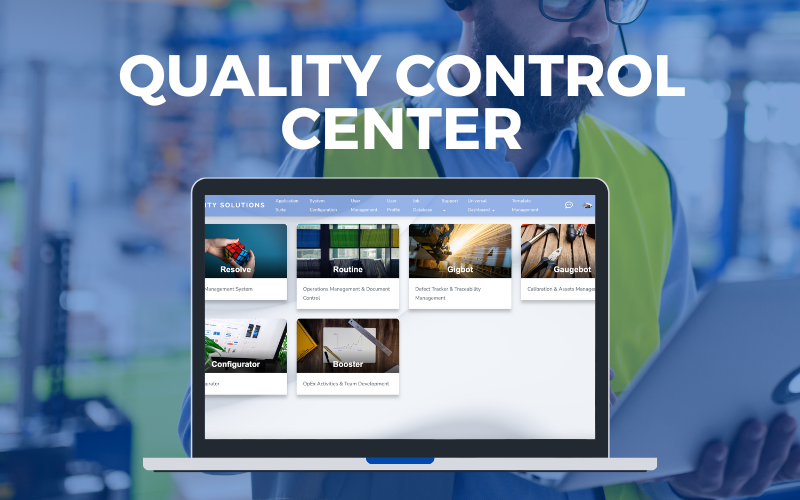
Optegrity makes quality visible. Routine puts the standard at the point of work. Gigbot captures defects in real time. Resolve closes the loop.
Not quality as a department. Quality as an operating system.
Schedule a 20-minute conversation →
Frequently Asked Questions
What does quality visibility mean in manufacturing?
Every operator and supervisor can access standards, defect data, and performance metrics in real time — at the point where decisions happen, not after the shift ends.
Why do most quality programs fail to build a real culture?
They separate quality from the work. Standards go in binders. Accountability lands in one department. Culture follows systems — build the right system and behavior follows.
What is the ROI of quality visibility software?
Reduced scrap and rework, faster root cause analysis, fewer customer escapes, lower warranty costs. One prevented quality escape typically covers the cost of the entire system.
How does Optegrity improve quality visibility?
Routine makes standards visible at the point of work. Gigbot captures defects in real time. Resolve drives structured problem-solving and closes corrective actions with accountability.
Leave a Reply