Your ERP has a plan. Your Floor has a Reality.
The gap between them is where lead time grows, quality escapes, and improvement stalls. Optegrity closes it — with digital standard work, real-time floor execution, and the visibility to see where the bottleneck is before the shift ends.
Lean manufacturing works when the system supports it.
Most operations are running on a patchwork — paper work orders, shared drive SOPs, tribal knowledge, and a whiteboard that tells you what should have happened, not what did.
The standard isn’t followed because nobody knows where to find it.
Work orders get written out by hand and tracked in a spreadsheet.
The bottleneck moves, and nobody knows until a supervisor walks the floor at 4 PM.
And the MES quote came back at $800,000 with a six-month implementation.
There is a better way to run the floor.
Run the standard. Every Shift.
Routine™ — Standard Work & Document Control
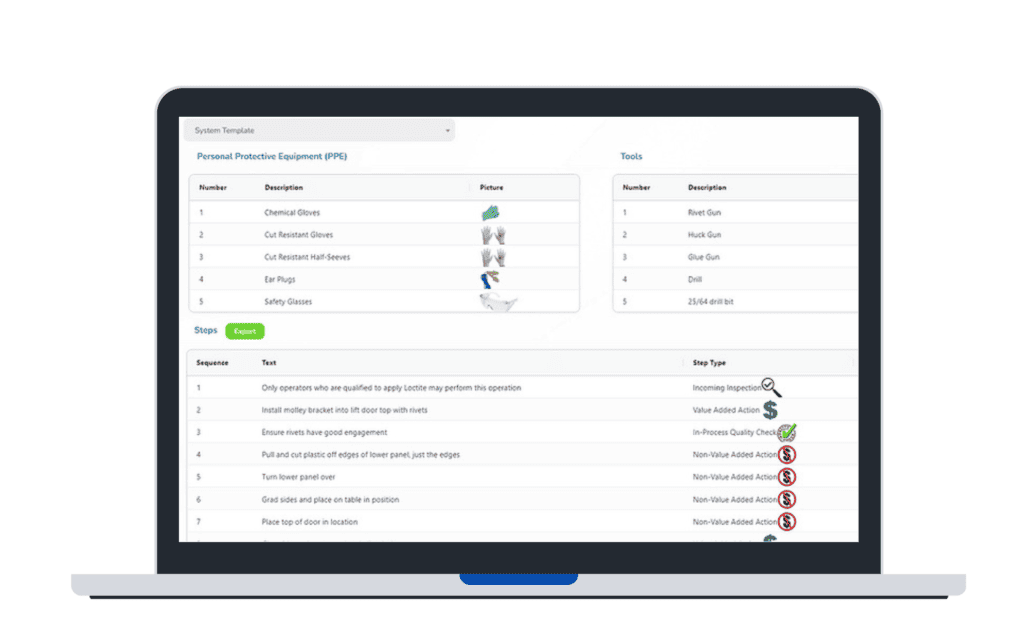
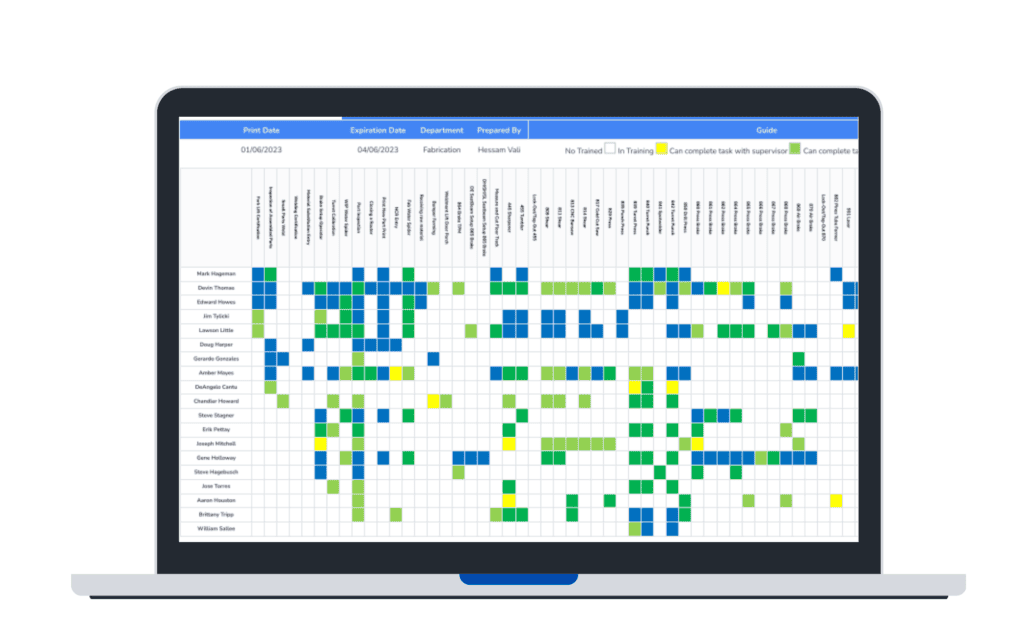
Digital SOPs and work instructions delivered at the point of work — current, visual, and connected to training. When the standard changes, every operator gets the update. When a new hire joins, the training follows the current version — not the one from three years ago.
OEMs: Standardize processes across shifts, cells, and sites.
Suppliers: Demonstrate documented, controlled processes to your customers.
More than a document list.
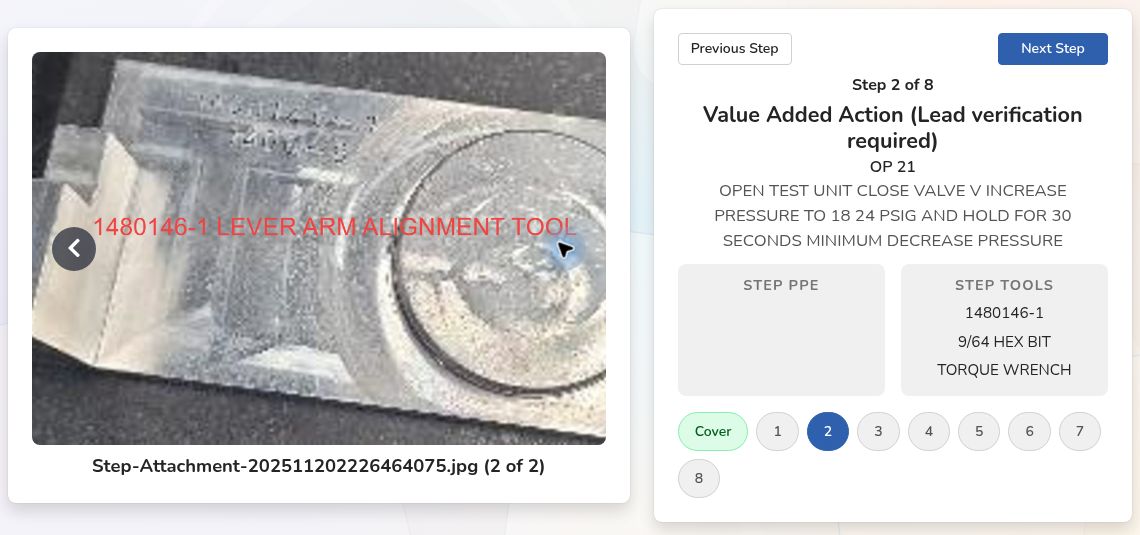
The approved work instruction puts the details of the operation in view: step-by-step navigation, visual guidance, tools, PPE, and lead-verification requirements.
The trial example above shows an eight-step valve-assembly guide, so your team can see the standard itself.
Put the standard where the work happens.
Work instructions and competency records support the same operation.
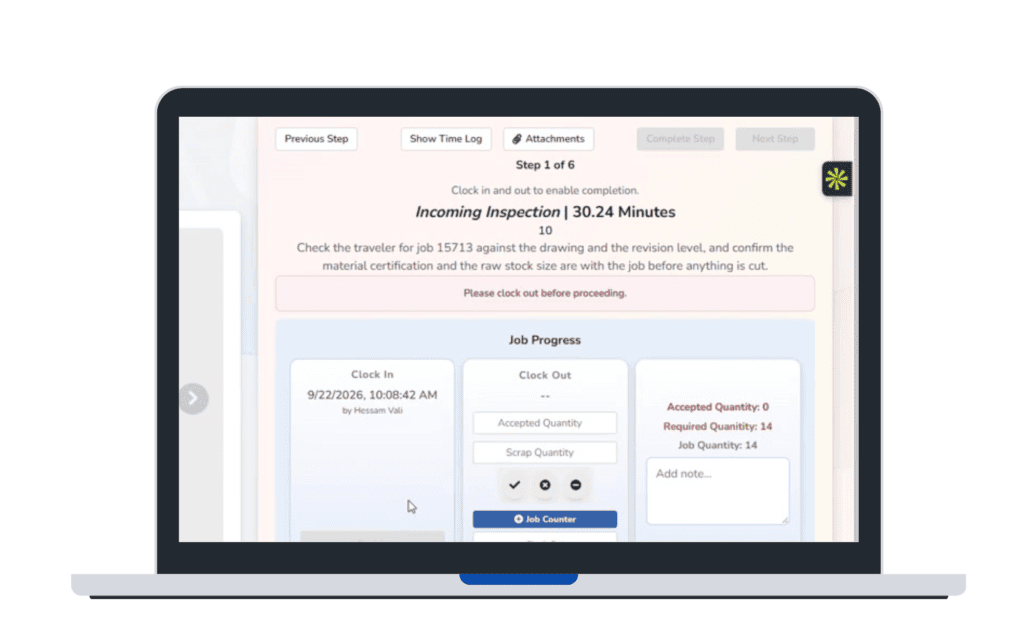
Real-time Floor Execution
Shop Floor Visibility & Work Orders
Know what’s happening on your floor — in real time. Job status, cycle time, operator activity, and production data captured as work happens. Work orders that follow the operator instead of waiting at a supervisor’s desk.
No more reconstructing what happened on second shift. No more lead time surprises you didn’t see coming.
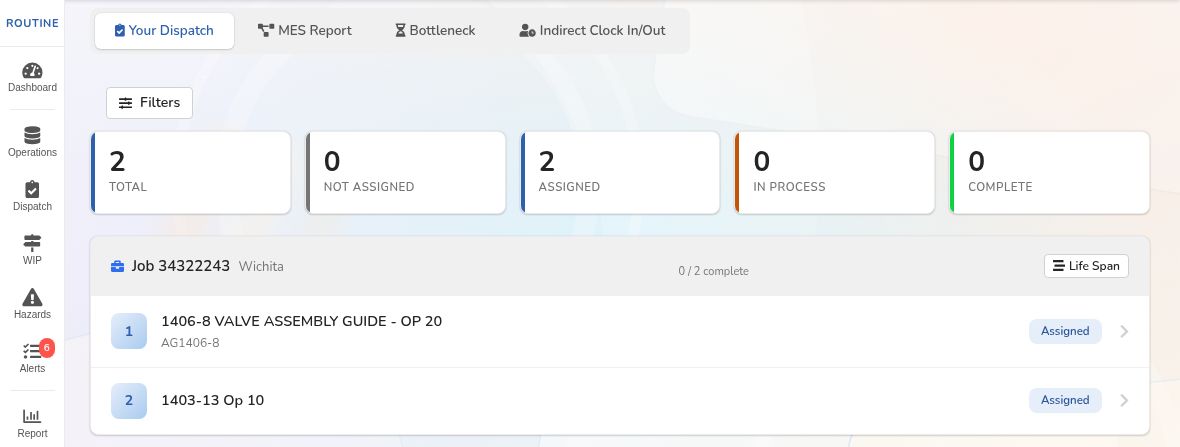
Find the Bottleneck. Fix It.
Bottleneck Analysis & Flow Visibility
Every production line has a constraint. Most operations don’t know where it is until it stops the line.
Optegrity surfaces cycle time data and flow performance across your operation so your team can see where the constraint is — and your improvement events are pointed at the right problem.
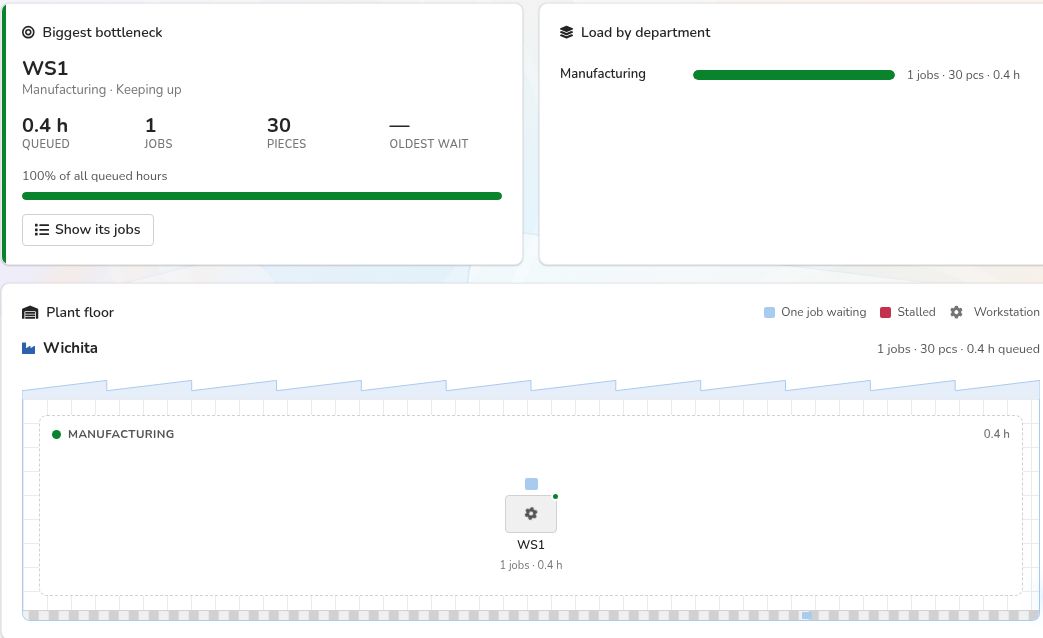
Routine’s bottleneck report lets you focus on work waiting between operations, jobs not yet started, or work stalled past a selected limit. Filter by site, department, workstation, or value stream, then review queue measures such as jobs and pieces waiting, hours queued, and oldest wait.
MES Without the Six-Month Implementation
Manufacturing Execution System — Built for Lean SMBs
A traditional MES is designed for high-volume, stable environments with an IT team and a six-month runway. Most lean SMB manufacturers don’t have either.
Optegrity delivers embedded MES functionality — standard work, quality capture, real-time floor data, and production tracking — without the enterprise overhead. Low IT lift. Embedded in the workflows your team already follows. Operational from day one.
This is not a replacement for your ERP. It is the execution layer that connects your ERP’s plan to what is actually happening on the floor.
See where work is waiting.
A bottleneck and queue report brings the next flow-improvement conversation into focus.